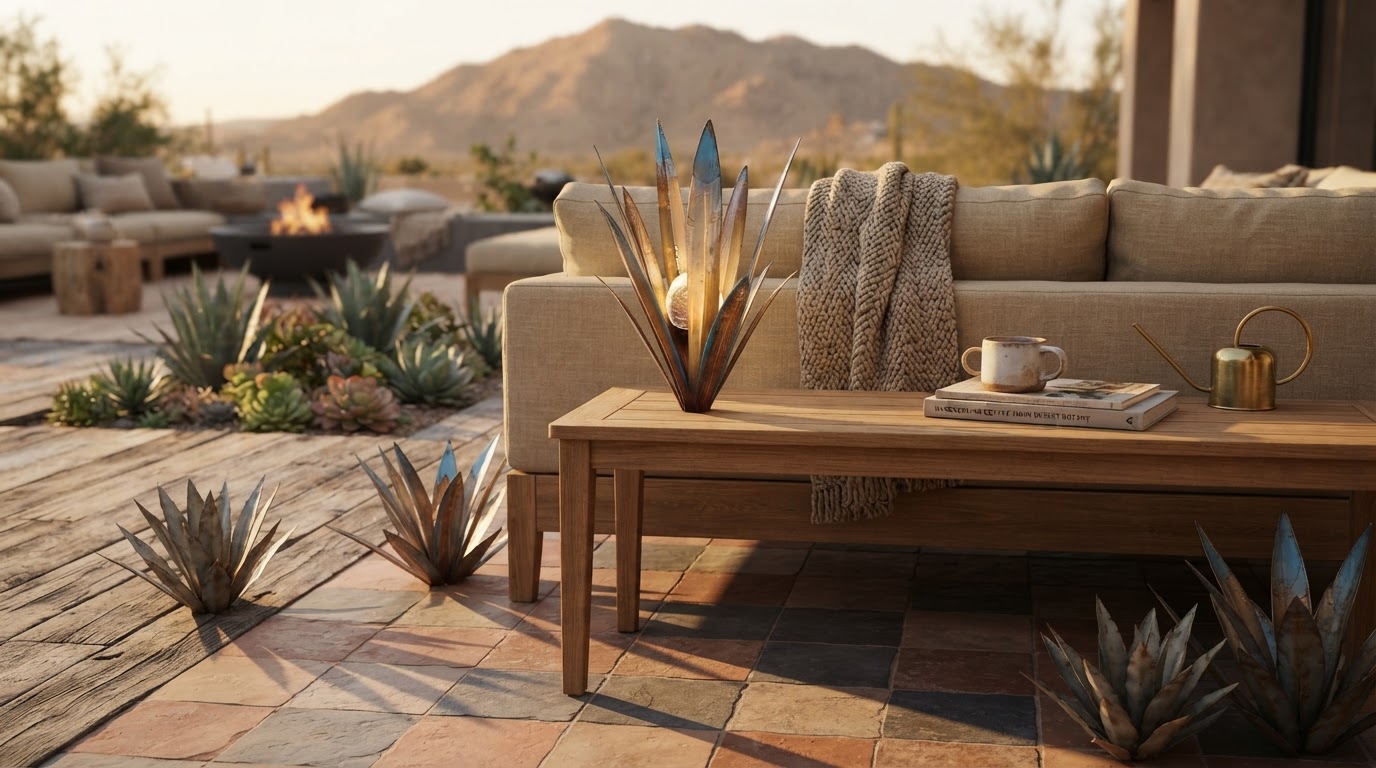
Solar Agave Lights Review: Evaluating Faux Desert Decor
 Maya ChenContributing Editor
October 18, 2026 — The market for desert-inspired outdoor decor is shifting toward low-maintenance artificial agave plant with solar lights, moving away from high-water-use botanical specimens. While the conventional wisdom says that faux plants are a compromise in quality, recent advancements in material science suggest otherwise.
Outdoor lighting trends are currently dominated by the integration of aesthetic foliage and functional illumination, particularly for homeowners in arid climates. According to data from Hooks & Lattice, modern faux agave is now rated for outdoor use with specific protections against fading, moisture, and temperature damage built directly into the body of the plant. This shift acknowledges that traditional landscaping often fails in extreme heat, where an artificial agave plant with solar lights can provide consistent visual appeal without the biological risk of rot or sun scorch. However, the performance of these units depends entirely on the quality of the photovoltaic integration rather than just the visual silhouette.
The Technical Performance Audit
Here's the part nobody talks about: the mechanical failure rate of integrated solar components in metal yard art often outpaces the degradation of the plant itself. When evaluating Solar Agave Lights, the focus must remain on the durability of the light bead and the switch mechanism. Research into metal agave yard art indicates that many consumers prioritize the color-changing capabilities over structural integrity. For instance, models such as those found at Menards feature lamp beads that cycle through various colors, but these require specific environmental conditions to reach full charge. Run the math: a standard solar collector on a decorative plant needs approximately 6 to 8 hours of direct UV exposure to power a multi-color LED for a full night cycle. If the plant is positioned in the shadow of a real succulent or a structural wall to simulate a natural look, the battery life drops by as much as 60%. The utility of these fixtures is further challenged by their IP (Ingress Protection) rating; while Pinterest trends highlight waterproof solar garden agave lamps, the reality is that many budget units lack the necessary seals to prevent internal corrosion during monsoon seasons. A high-quality unit must feature a sealed battery compartment and UV-resistant coating on the metal leaves to prevent the paint from chalking under intense solar radiation. Without these specifications, the decorative value of an artificial agave plant with solar lights diminishes within a single season, leaving the owner with a non-functional metal sculpture.
Expert tip: To maximize the lifespan of your Solar Agave Lights, apply a clear, UV-rated polyurethane spray to the metal leaves upon assembly to provide a secondary barrier against oxidation, especially if you are selecting solar agave lights for arid yard landscaping where dust abrasion is a constant factor.
Integrating these fixtures requires a strategic approach to placement, ensuring they complement existing solar agave plants for yard without creating light pollution. When properly installed, these solar agave plants for yard serve as both navigational markers and focal points. I'll change my mind about the superiority of live plants when the long-term lumen maintenance of these solar units consistently exceeds the three-year mark without significant battery degradation.
Sources
Photo by joao Guerreiro on Pexels
- Agave - Cacti & Succulents - Autograph Foliages
- Outdoor UV Rated 48" Green Agave - Hooks & Lattice
- Waterproof Solar Garden Agave Lamp - Pinterest