Desert Oasis Trends vs. The Reality of Solar Agave Lights
 Maya ChenContributing Editor
August 1, 2026 — The gardening industry is currently fixated on desert-inspired aesthetics, promoting low-water environments as the pinnacle of sustainable design. While the trend emphasizes xeriscaping and drought-resistant flora, the practical execution often overlooks the maintenance realities of high-heat environments.
The conventional wisdom says that a desert oasis is a set-it-and-forget-it solution for homeowners. However, Planet Desert notes that even drought-tolerant shrubs and succulents require specific soil drainage and care guides to prevent root rot during unexpected rain cycles. Furthermore, David W. Fitzsimmons highlights that a functional oasis requires active rainwater harvesting and consistent weeding to remain viable. Here's the part nobody talks about: the cost of maintaining living showpiece succulents often exceeds the initial installation budget due to pest control and specialized fertilization.
Photo by Angelo Capitanio on Pexels
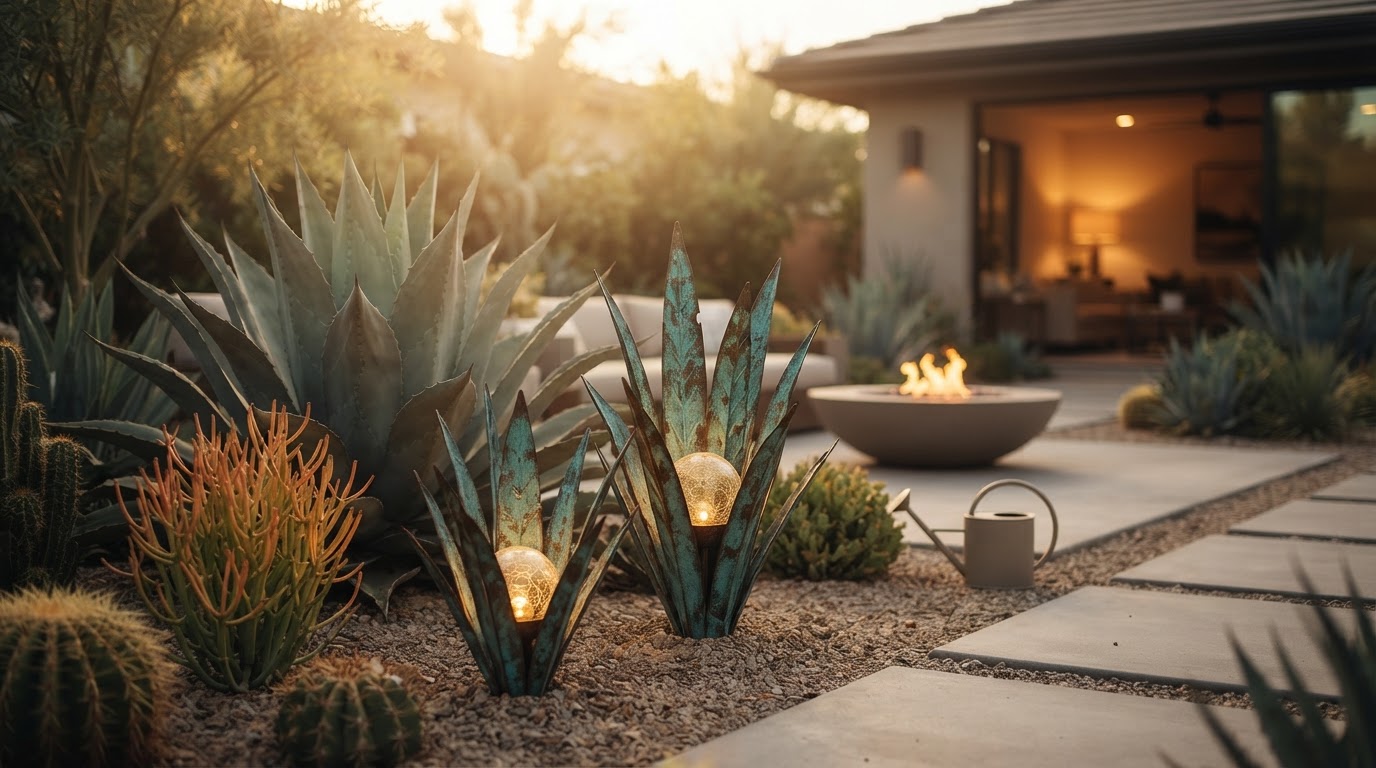
Solar Agave Lights offer a non-biological alternative to the high-maintenance agave species mentioned in common landscaping guides. These metal agave-style units, sold in a set of two, function as decorative placeholders that provide illumination without the water requirements of a living Americana Agave. While The Spruce suggests prioritizing simple, attractive beds for curb appeal, the reality is that living plants in a desert front yard can struggle with extreme heat fluctuations.
Expert tip: When placing metal fixtures like Solar Agave Lights in high-heat zones, position them near thermal-retaining rocks to stabilize the ground temperature around the base, which helps prevent the metal from sinking into loose, dry sand over time.
Run the math: a single large specimen succulent can cost upwards of $200 and requires 52 weeks of monitoring, whereas a metal light fixture provides immediate visual density with zero irrigation. For those exploring sustainable garden lighting, the shift toward durable outdoor decor reflects a move away from high-risk horticulture. Many homeowners are opting for metal garden art to fill gaps in drought-resistant landscaping where live plants have failed to thrive.
I'll change my mind when the survival rate of imported desert succulents in non-native climates exceeds 85% over a three-year period without supplemental irrigation. Until then, mechanical substitutes remain the more logical choice for consistent curb appeal.