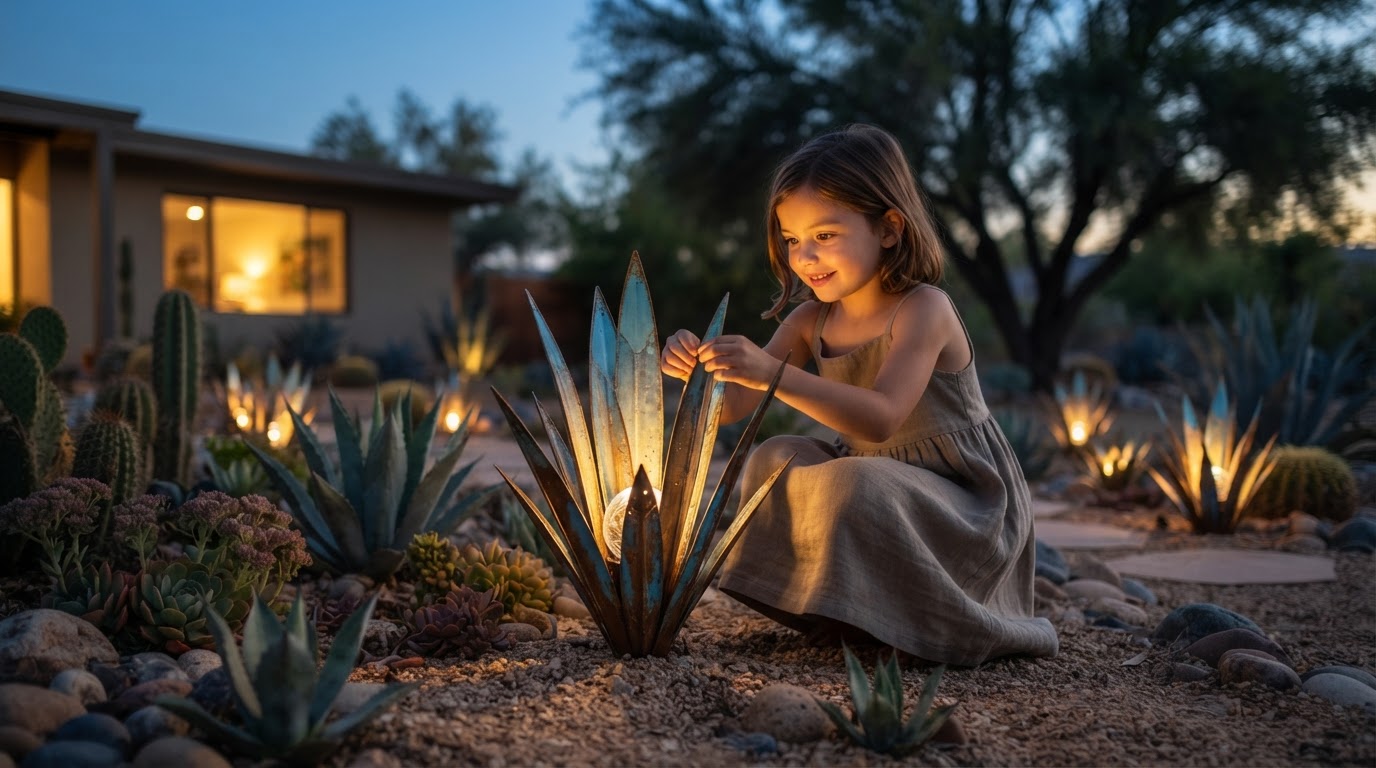
Enhancing Arid Landscapes With Solar Agave Lights
 Jordan HaleStaff Writer
October 31, 2026. A detailed exploration of how Solar Agave Lights bridge the gap between sculptural art and functional outdoor illumination. This guide is for homeowners seeking to balance aesthetic beauty with sustainable energy solutions in their private landscapes.
The first thing I noticed was the way the evening wind caught the edges of the metal leaves, a subtle metallic hum that felt at home in the quiet of a desert twilight. For many of us living in arid climates, the challenge of landscaping isn't just about what can survive the heat, but what can withstand the relentless sun while still looking intentional. Traditional plastic solar stakes often become brittle and bleached within a single season, losing their luster and their ability to hold a charge. The transition to metal-based decor represents a shift toward longevity. According to Pinterest curators of Waterproof Solar Garden Agave Lamp, these fixtures serve a dual purpose as eco-friendly, automatic illumination that triggers at dusk, solving the problem of high-maintenance wiring in expansive yards. When we look at sustainable desert landscaping with solar agave lights, we see a movement away from water-heavy plants toward structures that mimic nature without the resource drain. The weight of a metal agave sculpture provides a sense of permanence that lightweight alternatives lack. It turns out that the visual density of these pieces is what makes them effective anchors for a garden bed, especially when the living flora is sparse. Many homeowners struggle with the 'empty' look of a xeriscape during the winter months when even the hardiest succulents might go dormant or lose their vibrancy. By integrating metal art that houses a light source, the garden retains its architectural integrity twenty-four hours a day. The struggle for sufficient light in dark corners is real, and evaluating solar agave lights for arid garden lighting reveals that these are often the most reliable way to mark paths without digging trenches for electrical conduits.
Somewhere around week two, the true value of the integrated solar cell becomes apparent as the rhythm of the garden settles into a hands-off routine. Solar Agave Lights utilize a discreetly placed panel to harvest energy during the peak UV hours of the day, which is then stored in internal batteries to power multi-color LED arrays. These aren't just static white bulbs; as noted by eBay listings for Metal Agave Plant Sculptures, these units often feature blue and brown spikes with gold bases, housing LEDs that cycle through red, orange, and green. This color-shifting capability allows the light to interact with the rust-resistant finish of the metal, creating a glow that seems to emanate from the heart of the plant rather than a separate fixture. I keep coming back to the idea that garden lighting should be felt rather than seen. When you follow a 5-step setup for solar agave lights in modern yards, the goal is to hide the source and highlight the silhouette. The light reflects off the interior surfaces of the metal 'leaves,' casting long, rhythmic shadows across the gravel or sand. This is particularly effective when considering how do solar agave lights function in desert yards, where the lack of ambient city light allows the subtle colors of the LEDs to pop. The anti-rust coating mentioned in Pinterest's Anti-rust Metal Led Tequila Agave Plant descriptions ensures that the structural integrity remains intact even when exposed to the abrasive dust and occasional monsoons typical of the Southwest. Because they are autonomous, they function independently of a central hub, allowing you to place them in remote corners of a property where traditional power would be cost-prohibitive to install. This independence is a cornerstone of modern garden design, where flexibility is just as important as durability.
Choosing the right placement requires a framework that considers both the solar intake and the desired visual impact. It is important to ask do solar agave lights provide sufficient garden illumination for your specific needs, as their primary role is often atmospheric rather than task-oriented. To ensure the best results, consider this decision framework for your installation:
- Prioritize locations that receive at least six hours of direct, unobstructed sunlight to ensure the internal battery reaches full capacity.
- Select a site with a flat surface or stable soil where the metal base can be secured, preventing tipping during high winds.
- Position the lights near neutral-colored walls or light-colored gravel to maximize the reflection of the multi-color LEDs.
- Ensure the light sensor is not placed near bright streetlights or porch lamps, as this may prevent the automatic dusk-to-dawn activation.
- Group multiple units of varying heights to create a more natural, clustered appearance that mimics a wild agave colony.