Integrating Solar Agave Lights into Modern Landscapes
 Jordan HaleStaff Writer
August 3, 2026. This exploration details the aesthetic and functional integration of solar-powered desert flora into residential garden design. It is written for homeowners seeking to balance drought-tolerant aesthetics with automated outdoor utility.
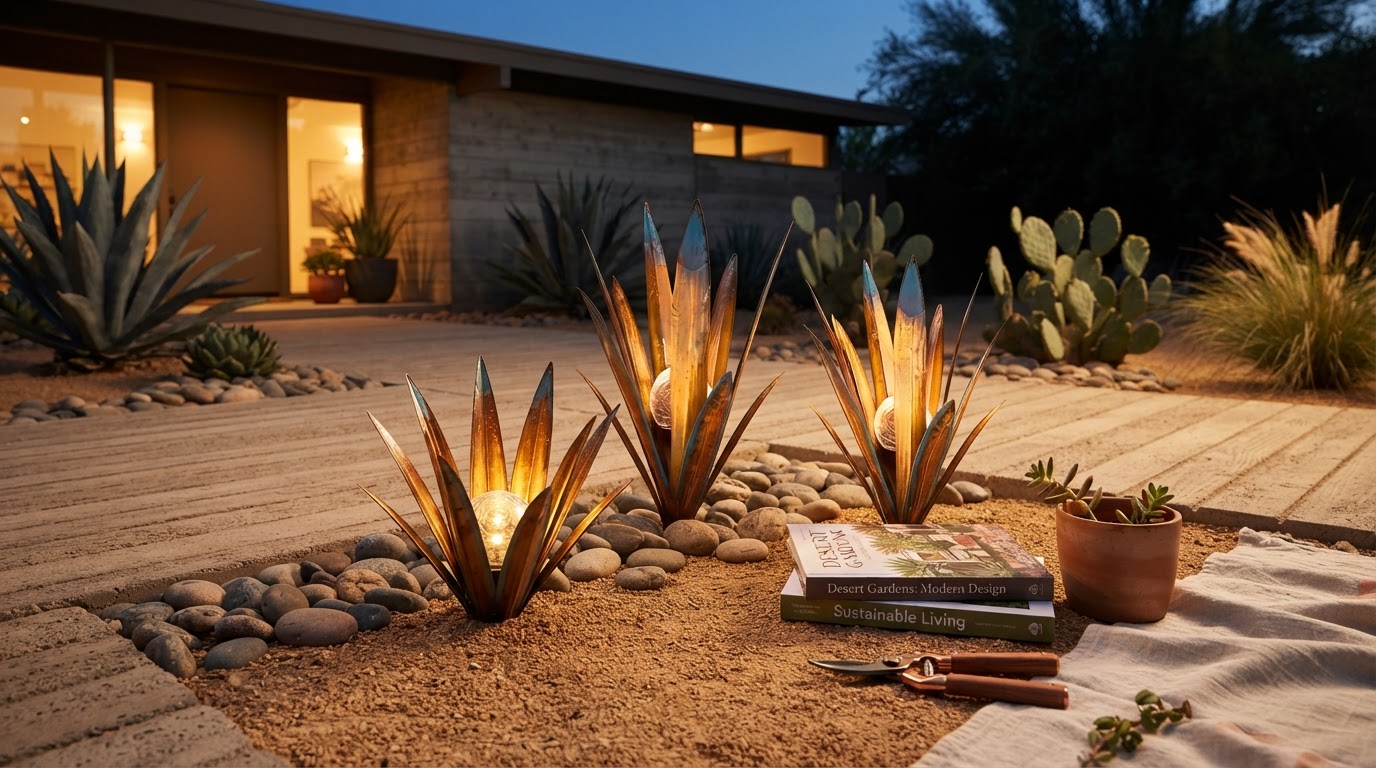
The first thing I noticed was the way the late afternoon sun caught the metallic edges of the leaves, casting long, sharp shadows across the gravel path before the internal sensors even registered the coming dusk. There is a specific weight to these pieces—a sturdy, grounded presence that feels far removed from the flimsy plastic stakes found in big-box clearance aisles. For those of us living in regions where water conservation defines our gardening choices, the silhouette of an agave is a familiar friend, yet maintaining live succulents can be a delicate dance of soil pH and drainage. According to Woodland International, these metal agave sculptures provide artistic flair to entries and patios while offering the benefit of automatic nighttime illumination. I watched as the sky shifted from a bruised purple to deep indigo, and the soft glow from the center of the metal leaves began to spill outward, transforming a static sculpture into a functional beacon. It turns out that the challenge of lighting a garden isn't just about visibility; it is about maintaining the character of the space after the sun retreats. When you place a traditional spotlight, you often lose the form of the plant itself, creating a harsh silhouette. These integrated units solve that by radiating light from within the heart of the succulent form.
Transitioning to Solar Agave Lights allows for a layer of texture that remains consistent regardless of the season or the health of your biological plants. I keep coming back to the tactile nature of the construction—the hand-painted finishes that mimic the natural variegation of a live Agave Americana. Because these units utilize integrated photovoltaic cells, the setup avoids the invasive process of trenching for low-voltage wiring, which often disrupts established root systems. The hardware is designed to withstand the elements, a necessity for any fixture intended for year-round exposure. As noted in product listings from Menards, these metal agave garden lights are built specifically for outdoor landscape applications, ensuring the internal electronics are protected from moisture. In my own yard, I positioned a pair near the trailhead of a small stone walkway. The light they emit is architectural rather than clinical; it emphasizes the surrounding textures of mulch, stone, and leaf without overwhelming the senses. This balance is critical for those who want their outdoor space to feel like an extension of their home’s interior design. The reliability of the solar charge cycle means that even after a moderately overcast day, the stored energy is sufficient to guide a path well into the midnight hours. It provides a sense of permanence in a landscape that is otherwise subject to the whims of growth and decay.
Choosing the right placement requires a strategic understanding of your property’s light exposure and foot traffic patterns. It is not merely about where a light looks best, but where it can harvest the most energy while serving a navigational purpose. I found that placing them in clusters of varying heights creates a more natural, meadow-like appearance than a rigid, linear arrangement. Pinterest design trends for waterproof solar garden agave lamps suggest that these fixtures are increasingly used as focal points in rock gardens where traditional wiring is difficult to install. When evaluating your space, consider the height of the surrounding flora; you want the solar panel to have an unobstructed view of the sky during peak daylight hours. The durability of the metal casing means you don't have to worry about the occasional stray ball or a curious pet, but the placement should still feel intentional.
Before finalizing your installation, consider this framework for optimal integration:
- Assess the daily sun exposure to ensure the internal battery reaches a full charge cycle.
- Mix different sizes, such as the 16-inch and 13-inch variants, to create visual depth and mimic natural growth patterns.
- Use these lights to define boundaries between active social areas and passive garden beds.
- Clean the solar collectors monthly with a damp cloth to maintain charging efficiency against dust and pollen.
- Position the units near natural stone or water features to take advantage of reflective surfaces.
- Ensure the base is securely anchored into the soil or a heavy decorative pot to prevent shifting during high winds.
Sources
Photo by Nothing Ahead on Pexels
- Solar-Powered Metal Agave Plant Garden Light
- Garden solar light waterproof garden agave
- 2Pcs Metal Agave Solar Garden Lights - 16" & 13" Outdoor Decor ...