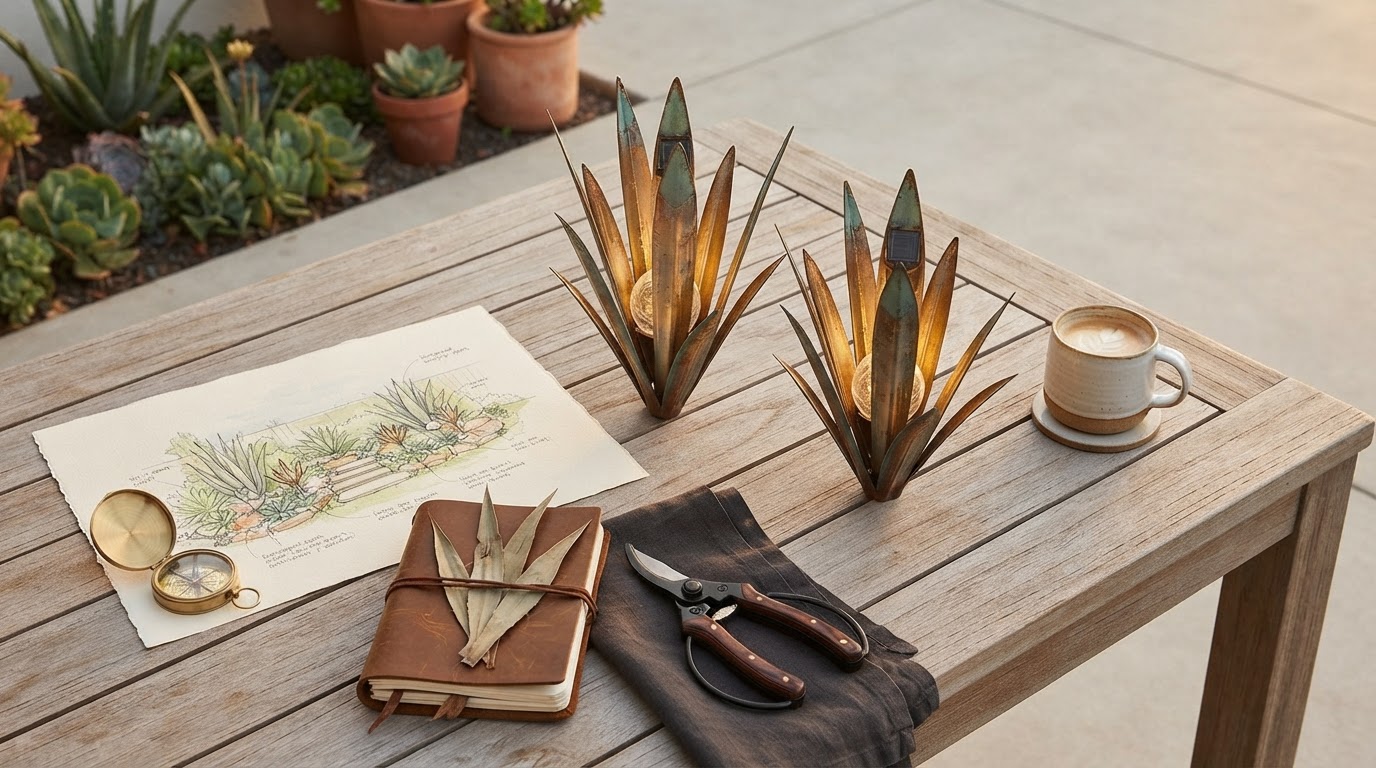
How long do Solar Agave Lights stay illuminated at night?
 Sam VasquezBuying Guide Lead
August 3, 2026 — Solar Agave Lights typically provide between six and eight hours of illumination per night, provided the integrated photovoltaic cells receive at least six hours of direct, unobstructed sunlight during the day.
Homeowners and landscape designers often ask this question when planning garden layouts that require consistent evening ambiance without the complexity of hardwired systems. Understanding the threshold between decorative glow and functional runtime is essential for ensuring your outdoor space remains lit through the primary evening hours. Performance varies based on seasonal light cycles and geographic location, but the hardware itself is designed for standard residential cycles.
How does weather affect Solar Agave Lights performance?
Weather conditions impact both the daily charging capacity and the long-term structural integrity of the fixture. In my experience, the biggest variable isn't just rain, but the density of cloud cover which can reduce the energy harvest of the solar panel by over 50%. While these units are built to withstand standard precipitation, extreme conditions like heavy snow or prolonged submersion will degrade the battery housing over time. According to resources on Pinterest regarding Waterproof Solar Garden Agave Lamp designs, weather-resistant coatings are standard, but they still require clear skies to hit their peak runtime. If you live in a region with frequent overcast skies, I would suggest placing the lights in the most exposed part of the yard rather than tucked under eaves. Between a shaded spot and a high-exposure spot, I'd go with the latter every time, even if the aesthetic placement isn't perfectly symmetrical.
Why do solar lights sometimes fail to last through the night?
Photo by quang vinh on Pexels
Most premature failures are caused by poor placement or battery depletion rather than a defect in the LED itself. If the internal NiMH or Lithium-ion battery doesn't reach a full state of charge, the light will flicker or shut off within two to three hours. A report by PacLights on why solar garden lights do not last long notes that improper positioning is a leading cause of performance dissatisfaction. I've found that even a thin layer of dust on the solar collector can drop efficiency by 10% or more. Skip this if you aren't willing to wipe the panels down once a month. If you're on a budget, you might be tempted to ignore maintenance, but keeping the sensors clear is the only way to ensure they hit that eight-hour mark mentioned by Gardeners' World in their 2026 solar testing. Here's what I'd actually buy: a model with a replaceable battery, so when the cell eventually loses its capacity after 500 charge cycles, you aren't throwing away the whole metal agave sculpture.
Quick answers
Photo by Unggul Budi on Pexels
Q: Can Solar Agave Lights stay out in the winter? A: Yes, most are rated for year-round use, but expect the runtime to drop to 3-4 hours due to shorter daylight periods and lower sun angles. If temperatures drop below -4°F, the battery chemistry may struggle to hold a charge.
Q: How many lumens do these lights typically produce? A: Most decorative Solar Agave Lights emit between 5 and 15 lumens, focusing on an ambient glow rather than path illumination. This is sufficient for highlighting garden textures but not for security lighting.
Q: How long does the internal battery last before it needs replacing? A: You can generally expect the pre-installed rechargeable battery to last 12 to 24 months. Replacing the standard AA or AAA NiMH cell will usually restore the light to its original 8-hour runtime.
Learn more about Solar Agave Lights at https://solyraagavelights.com.