Solar Agave Lights for Southwestern Outdoor Accent Lighting
 Jordan HaleStaff Writer
September 26, 2026. This guide explores the integration of Solar Agave Lights into high-heat, arid environments to create distinctive nighttime silhouettes. It is written for homeowners seeking to balance regional aesthetics with sustainable lighting technology.
The first thing I noticed was the way the heat ripples off the gravel at dusk, a reminder that the desert doesn't just tolerate the sun; it absorbs it. In these environments, traditional plastic lighting fixtures often surrender within a single season, becoming brittle and bleached. According to Pebble Creek Lighting, southwestern style light fixtures are typically custom built to architectural standards using thick metal and precision laser cuts to withstand these harsh conditions. When you are looking for southwestern outdoor accent lighting, the challenge isn't just finding a light; it is finding a form that looks as intentional at noon as it does at midnight. I have spent hours watching how shadows fall across xeriscaped yards, noticing that most solar solutions feel like afterthoughts—small plastic stakes that disappear against the vastness of a desert horizon. To truly capture the spirit of the region, lighting must mimic the flora it sits beside. This is why [desert landscape solar lighting ideas](/blog/desert-landscape-solar-lighting-ideas) often focus on structural depth rather than just brightness. The goal is to avoid the 'airport runway' look of lined paths and instead create pockets of interest that draw the eye toward the textures of stone and sand.
Photo by 🇻🇳🇻🇳Nguyễn Tiến Thịnh 🇻🇳🇻🇳 on Pexels
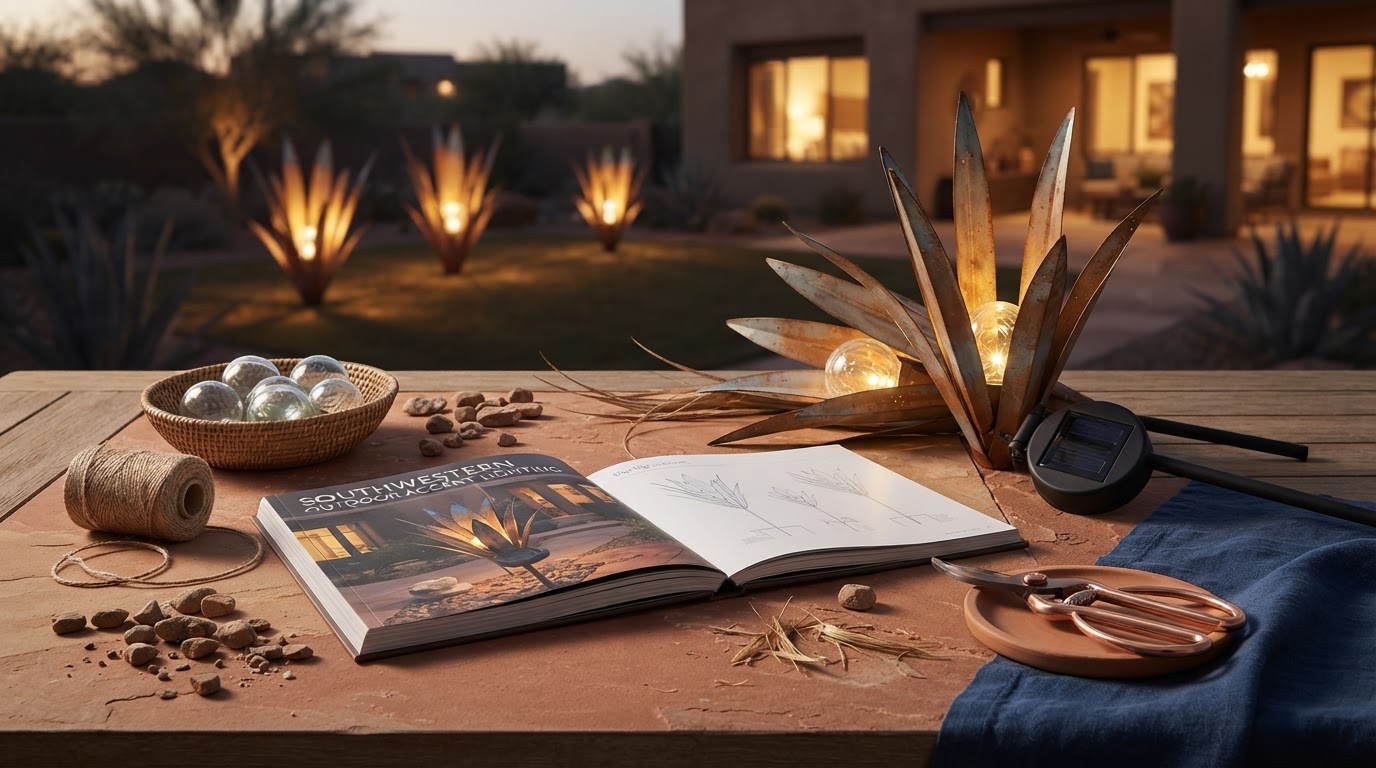
Somewhere around week two, the Solar Agave Lights began to feel less like hardware and more like a permanent part of the garden's ecology. These fixtures address the specific durability needs of the Southwest by utilizing a metal agave structure that houses the solar components internally. It turns out that the weight of the metal is crucial; it prevents the light from shifting during the sudden, violent monsoon winds that can sweep through a valley. Unlike standard [desert style solar garden stakes](/blog/desert-style-solar-garden-stakes) which might rely on thin plastic stems, the agave form provides a wide, stable base that anchors the light visually and physically. The light itself emanates from the center of the metal leaves, casting a glow that highlights the 'light up agave plant' silhouette that has become a staple in modern desert design. I keep coming back to the way the light interacts with the surrounding area—it doesn't just illuminate the ground; it creates a sculptural shadow play. This is particularly effective when paired with [outdoor metal cactus decor with lights outdoor](/blog/outdoor-metal-cactus-decor-with-lights-outdoor), as the varying heights of metal flora create a tiered lighting effect. The solar panels are integrated to capture maximum UV exposure, a necessity in regions where the sun is the primary resource. Because these are standalone units, they bypass the need for trenching wires through hard, rocky soil—a task that often deters homeowners from installing professional-grade southwestern accents.
Selecting the right placement for these fixtures requires a framework that considers both the solar intake and the visual weight of the metal art. When planning your layout, it is helpful to look at professional galleries; for instance, Lamps Plus showcases how southwestern outdoor lighting can range from gas lanterns to flush mounts, emphasizing that the style is defined by its rugged, earthy materials. To ensure your solar powered desert landscaping lights perform optimally while maintaining the aesthetic integrity of your property, consider this decision framework:
- Verify the gauge of the metal to ensure it can withstand high-UV exposure without warping or losing its finish.
- Assess the solar panel placement to ensure it receives at least six hours of unobstructed sunlight, even when the agave leaves are at full spread.
- Coordinate the scale of the light with existing vegetation; a large metal agave should serve as a focal point rather than being crowded by overgrown shrubs.
- Evaluate the color temperature of the LED; a warm glow (2700K-3000K) typically complements the reds and oranges of desert soil better than cool white light.
- Plan for year-round durability by choosing fixtures with an IP65 weather resistance rating or higher to protect against dust and heavy rain.
Shop Solar Agave Lights here: https://solyraagavelights.com