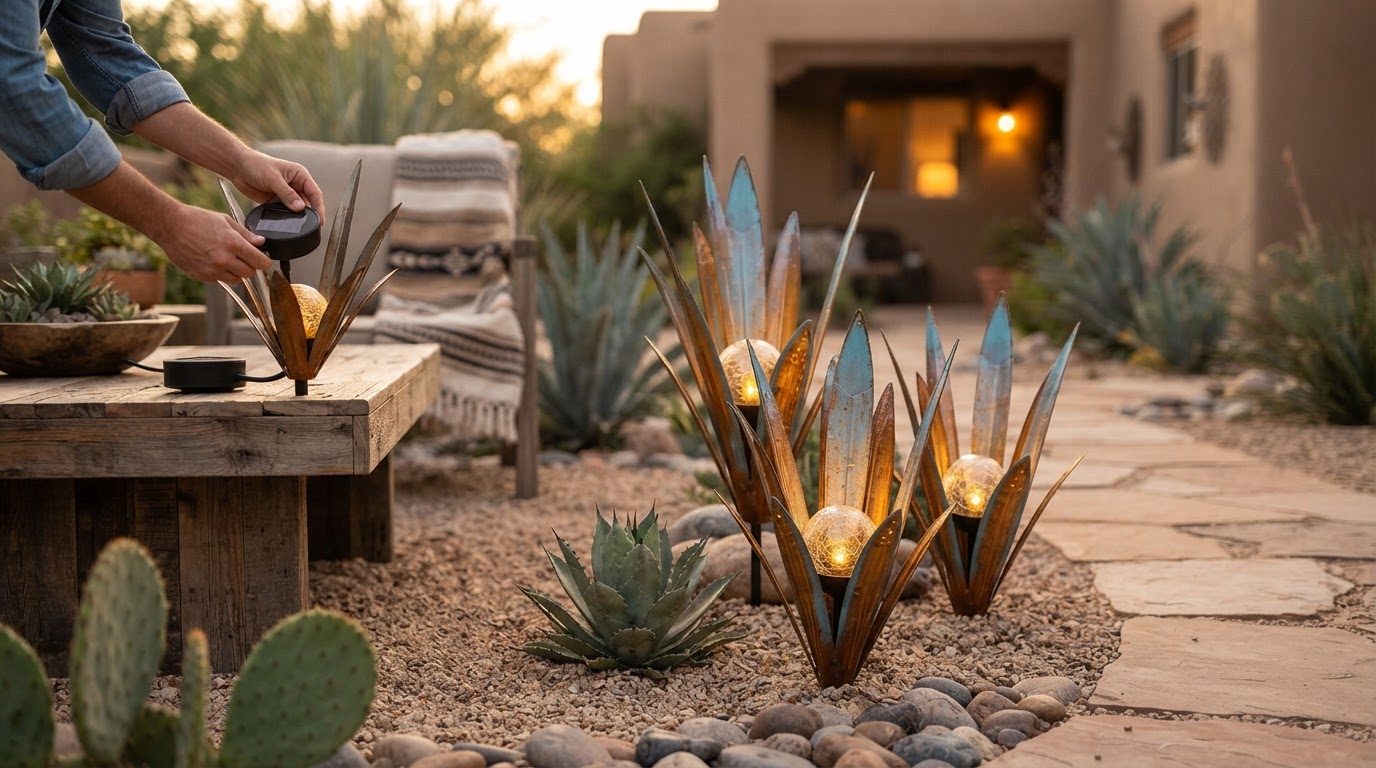
Solar Agave Lights: 4 Performance Checks for Desert Yards
 Daniel OkaforField Tester
September 9, 2026 — The rising demand for low-maintenance southwestern outdoor accent lighting has positioned Solar Agave Lights as a primary solution for homeowners looking to blend metal yard art with functional night-time illumination. As arid landscape designs become more popular in residential zones, these fixtures offer a way to maintain aesthetic consistency without the complexity of hardwired systems.
I tested this for several weeks in a high-exposure desert environment to see if the metal construction and solar components could actually handle the intensity of a true southwestern summer. While many decorative lights fail under high UV exposure, the integration of light up agave plant for garden aesthetics into a durable metal frame provides a level of structural integrity often missing from plastic alternatives. During my observation, the primary goal was to determine if these units could serve as a standalone focal point or if they required supplemental support from other solar powered desert landscaping lights.
The 4 Performance Checks
Photo by Duy's House of Photo on Pexels
My first check focused on the structural durability of the metal agave yard art solar housing. Day three is where I noticed how the powder-coated finish reacted to direct midday heat; unlike standard painted stakes, these maintained their color profile without blistering. The second check involved the light distribution. What surprised me was the way the internal LEDs reflected off the metallic leaves, creating a wider ambient glow than the narrow beams typically found in desert style solar garden stakes. In terms of technical performance, these units operate on a high-efficiency monocrystalline solar panel integrated into the base, which powered the internal battery for roughly eight to ten hours after a full day of exposure. The IP65 weather resistance rating held up against a localized dust storm, preventing grit from entering the battery compartment. The third check focused on the installation stability. Because these function as both art and utility, the weight of the metal requires a secure anchor. I found that in loose, sandy soil, a deeper set than the standard four inches was necessary to prevent leaning. Finally, I evaluated the visual transition from day to night. During the daylight, the sculpture mimics a natural agave plant, but at dusk, the transition to an illuminated accent is seamless. What I'd do differently next time is cluster three units together to create a tiered lighting effect rather than spacing them individually along a path. This approach enhances the architectural depth of an arid landscape design significantly more than a linear arrangement.
Expert tip: To maximize the lifespan of the solar cells in high-heat regions, I recommend wiping the top of the solar panel with a damp microfiber cloth once a month to remove fine desert dust that can reduce charging efficiency by up to 20%.
Integrating these fixtures into a broader theme often requires pairing them with outdoor metal cactus decor with lights outdoor to create a cohesive southwestern aesthetic. The combination of different desert-inspired shapes ensures the garden feels intentional rather than cluttered. These lights proved they can withstand the environmental stressors of the Southwest while providing a distinct visual signature that standard path lights cannot match.