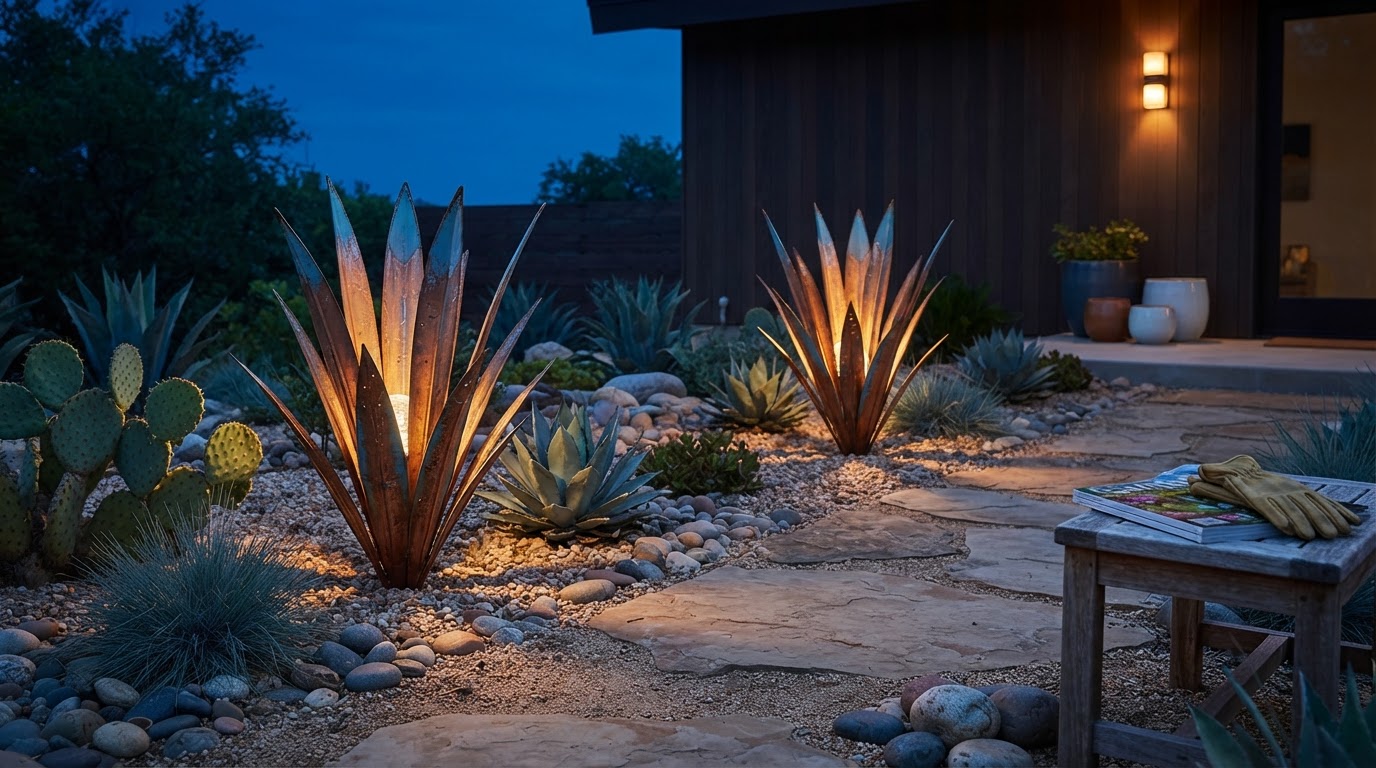
Solar Agave Lights for Arid Landscape Design
 Jordan HaleStaff Writer
September 6, 2026. This evaluation explores how sculptural lighting elements integrate into low-water environments to maintain visual interest after sundown. It is intended for homeowners seeking to balance drought-tolerant aesthetics with functional illumination.
The first thing I noticed was the way the shadows fell across the gravel mulch in my side yard. In high-desert environments, the transition from day to night is abrupt, stripping the landscape of its daytime texture and leaving behind a flat, dark expanse. Traditional wired lighting often feels intrusive here, requiring trenching through caliche or hard-packed earth that resists every shovel strike. I keep coming back to the challenge of creating depth in a space where traditional greenery struggles to survive. Many residents find that standard path lights feel flimsy against the stark backdrop of a xeriscape. According to the United States Environmental Protection Agency, xeriscaping can reduce water use by up to 70%, but the physical layout of these gardens often leaves large gaps that look barren at night. Without a structural element to catch the light, the yard simply disappears when the sun dips below the horizon. The goal is to find a solution that feels as permanent and rugged as the landscape itself, rather than a plastic afterthought that will fade under the intense UV index of the Southwest.
Photo by Artūras Kokorevas on Pexels
It turns out that the solution lies in the intersection of metalwork and photovoltaic technology. Solar Agave Lights function as both a botanical stand-in and a light source, solving the problem of the "empty" desert garden. During my time observing these fixtures, I found that the hand-painted metal leaves provide a necessary verticality that complements solar powered desert landscaping lights. The construction is heavy enough to withstand monsoon-season winds without shifting, a common failure point for lighter desert style solar garden stakes. Because the light source is nestled within the metal leaves, it creates an internal glow that highlights the silhouette of the agave rather than just casting a generic beam on the ground. This specific design addresses the high demand for outdoor metal cactus decor with lights outdoor, catering to those who want the form of a succulent without the irrigation requirements. The integrated solar panels are positioned to capture the high-intensity light typical of arid regions, ensuring the internal battery reaches a full charge even during shorter winter days. This reliability is essential when these pieces are used as focal points in a southwestern outdoor accent lighting scheme, where consistency defines the quality of the installation.
When selecting specific pieces for an arid environment, the decision framework should prioritize material durability and light placement. I recommend evaluating your space based on the following criteria:
- Material Gauge: Ensure the metal is thick enough to resist bending in high winds and has a weather-resistant finish to prevent premature oxidation.
- Light Temperature: Look for warm-toned LEDs that mimic the natural glow of a sunset rather than harsh, cool-blue tones that can make desert rocks look clinical.
- Placement Strategy: Position the lights near natural boulders or architectural walls to maximize the shadow-play created by the agave leaves.
- Height Variation: Mix different sizes of agave fixtures to create a more natural, clustered appearance characteristic of wild desert growth.
- Solar Panel Access: Verify that the chosen spot receives at least six hours of direct sunlight, avoiding the deep shadows of the house or large mesquite trees.