Enhancing Desert Landscapes with Solar Agave Lights
 Jordan HaleStaff Writer
August 23, 2026. This exploration details the integration of outdoor metal agave solar lights into modern residential landscapes. It is written for homeowners seeking to balance durable garden art with functional, eco-friendly illumination.
I remember the late July evening when the heat finally broke, leaving the air thick with the scent of dry sage and cooling stone. The first thing I noticed was how the natural shadows of the yard seemed to swallow the traditional path lights I had installed years ago. They were flimsy, functional, but entirely devoid of character. In high-desert or arid environments, the landscape demands something with a bit more gravity—pieces that look as though they were forged by the sun itself. Many gardeners struggle with the transition from daylight beauty to nighttime visibility. Traditional lighting often feels like an afterthought, a series of plastic stakes that detract from the organic flow of the garden. According to the International Dark-Sky Association, effective outdoor lighting should be shielded and directed downward to reduce light pollution while highlighting specific architectural or botanical features. This is where the challenge lies: finding a fixture that serves as a sculptural anchor during the day and a warm, atmospheric beacon at night without contributing to the cluttered look of standard utility lights.
Photo by Constantine Kim on Pexels
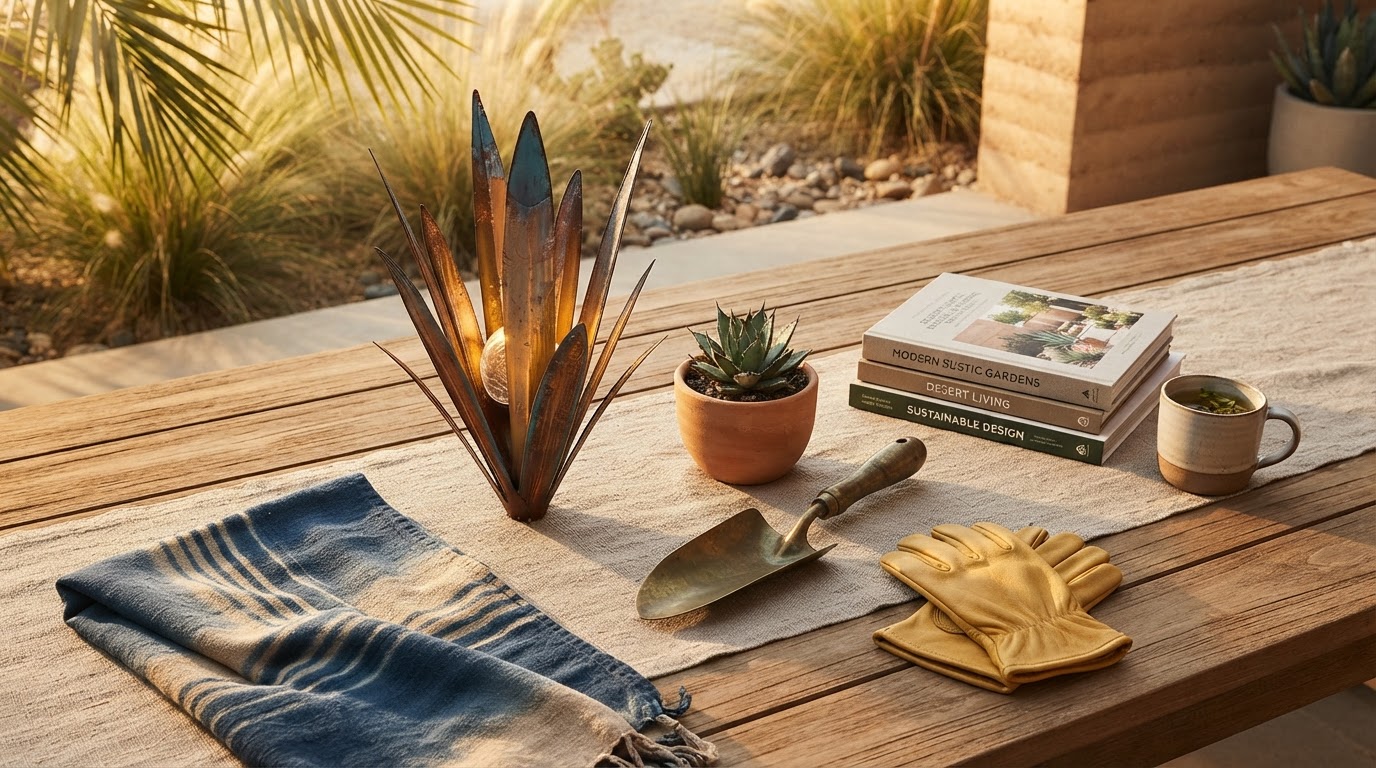
It turns out that the solution lies in the intersection of structural art and photovoltaic technology. Solar Agave Lights are designed to mimic the resilient, architectural form of the agave plant, providing a permanent fixture that resists the elements while capturing energy. When I handled the metal leaves for the first time, I felt the cool, industrial weight of the powder-coated steel—a stark contrast to the brittle components found in metal solar stake lights vs plastic. These units function as metal agave yard art with solar lights, utilizing integrated solar panels that sit discreetly within the foliage. Unlike standard lights that require trenching or wiring, these fixtures are self-contained. The light up agave plant for garden installations we see trending today rely on this autonomy to allow for placement in remote corners of a lot where power isn't accessible. The light emits from the center of the bloom, casting intricate shadows through the metallic leaves, which effectively turns the entire plant into a glowing lantern. This design ensures that the outdoor metal plant statues solar remain visually striking even when the sun is at its peak, avoiding the "utility" look of common garden hardware.
Somewhere around week two, I began to appreciate the maintenance-free nature of these installations. To ensure you select the right fixture for your specific micro-climate, consider the following framework. First, verify the material composition; in coastal or high-humidity areas, opting for rust proof metal garden lights is essential to prevent oxidation of the internal housing. Second, assess the solar powered desert landscaping lights for their lumen output—you want a warm glow that accentuates the metal texture rather than a harsh white light that washes out the garden. Third, check the anchoring system; because these are substantial metal pieces, they require a deep stake to remain upright during high winds. I keep coming back to the idea that garden lighting should be a permanent part of the art, not just a seasonal accessory.
- Prioritize powder-coated steel to ensure long-term weather resistance.
- Select a placement that receives at least six hours of direct sunlight for maximum nighttime duration.
- Choose fixtures with internal, protected solar cells to maintain the aesthetic of the agave shape.
- Coordinate the height of the agave light with existing ground cover to create a layered visual effect.
- Ensure the base includes a secure ground stake to prevent shifting in loose or sandy soil.