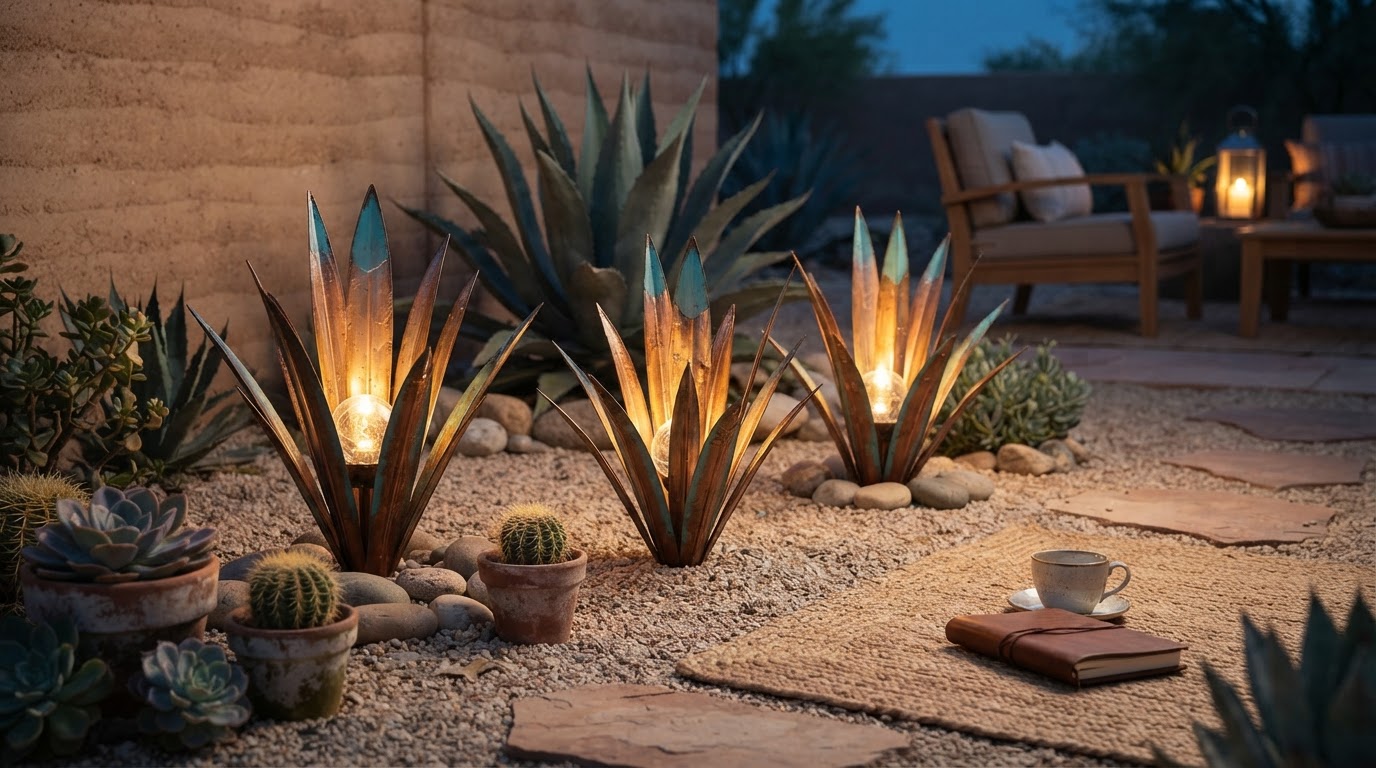
Enhancing Desert Landscapes With Solar Agave Lights
 Jordan HaleStaff Writer
September 11, 2026. This exploration details the integration of durable metal garden art with renewable energy for residential outdoor spaces. It is written for homeowners seeking to blend structural desert aesthetics with functional night-time illumination.
The first thing I noticed was the way the late afternoon sun caught the metallic edges of the agave leaves, creating a sharp, architectural silhouette against the stucco of my back wall. In many arid regions, maintaining live succulents can be surprisingly temperamental, especially when drainage or frost becomes an issue. Homeowners often struggle to find a balance between high-maintenance botanical gardens and the sterile look of gravel-only xeriscaping. According to landscaping trends identified by the American Society of Landscape Architects, there is a growing shift toward "low-impact" outdoor rooms that prioritize both water conservation and durable materials. The challenge lies in the transition from day to night; a beautiful yard during the golden hour often disappears into a black void once the sun sets. Traditional wired lighting requires trenching through established rock beds, which is both costly and disruptive to the soil structure. Many people find themselves looking for agave garden decor solar powered that functions as a sculpture during the day while providing necessary visibility at night. The weight of these metal pieces is substantial enough to withstand high winds, yet they remain portable enough to reposition as the seasons change. I’ve watched how shadows play across the ground when the light source is nestled deep within the metal leaves, creating a radial pattern that mimics the natural growth of a desert plant. This isn't just about utility; it's about reclaiming the yard after dark without the harsh glare of industrial floodlights. Finding a light up agave plant for garden use means looking for materials that won't rust through or fade under the intense UV exposure typical of the Southwest.
Photo by JUNLIN ZOU on Pexels
Somewhere around week two, I realized that the internal placement of the LED components within Solar Agave Lights is what sets them apart from standard stake lights. The light doesn't just sit on top; it emanates from the heart of the metal sculpture. This design choice highlights the intricate "teeth" and curves of the metal agave, turning the fixture into a focal point rather than a hidden utility. The solar panels are integrated to capture maximum daylight, even when tucked slightly under the foliage of larger trees, though direct sun remains the gold standard for a full eight-hour glow. It turns out that the choice of metal over plastic is critical for longevity in a yard environment where pets, lawn equipment, or weather events can easily snap flimsier alternatives. For those focusing on specific areas like porches or entryways, an artificial agave solar patio decor setup provides a consistent look that never wilts or requires irrigation. The scale of these lights is intentional; they are large enough to be seen from the street, providing a sense of security and curb appeal that smaller lights lack. When you integrate an artificial agave plant with solar lights, you are essentially installing a permanent art piece that pays for itself through zero energy costs. The glow is typically a warm white, which complements the natural tones of sand, wood, and stone rather than the sterile blue hue found in cheaper solar products. This warmth is essential for creating an inviting atmosphere where guests feel comfortable lingering long after the sun has disappeared behind the horizon.
Selecting the right placement for these fixtures requires a basic understanding of your yard’s light cycles and foot traffic patterns. I keep coming back to the idea that lighting should be layered—some pieces acting as anchors near the home, while others draw the eye to the back corners of the property. When browsing for solar agave plants for yard use, consider the height of the surrounding flora to ensure the solar sensors aren't permanently shaded by growing shrubs. A well-placed agave light can act as a wayfinder along a dark path or as a centerpiece in a circular driveway. Before finalizing your layout, walk your property at dusk to see where the natural shadows fall. You want the light to spill outward, highlighting the texture of the ground and the edges of the metal leaves. Use this framework to evaluate your specific needs:
- Verify the metal gauge to ensure the leaves won't bend easily under moderate pressure.
- Check the solar panel placement to confirm it can receive at least 6 hours of unobstructed sunlight.
- Assess the base stability, ensuring the light can be anchored into soil, gravel, or decorative pots.
- Match the metal finish—whether rustic patina or polished steel—to your existing outdoor furniture or hardware.
- Evaluate the light temperature to ensure it aligns with other existing outdoor luminaires.